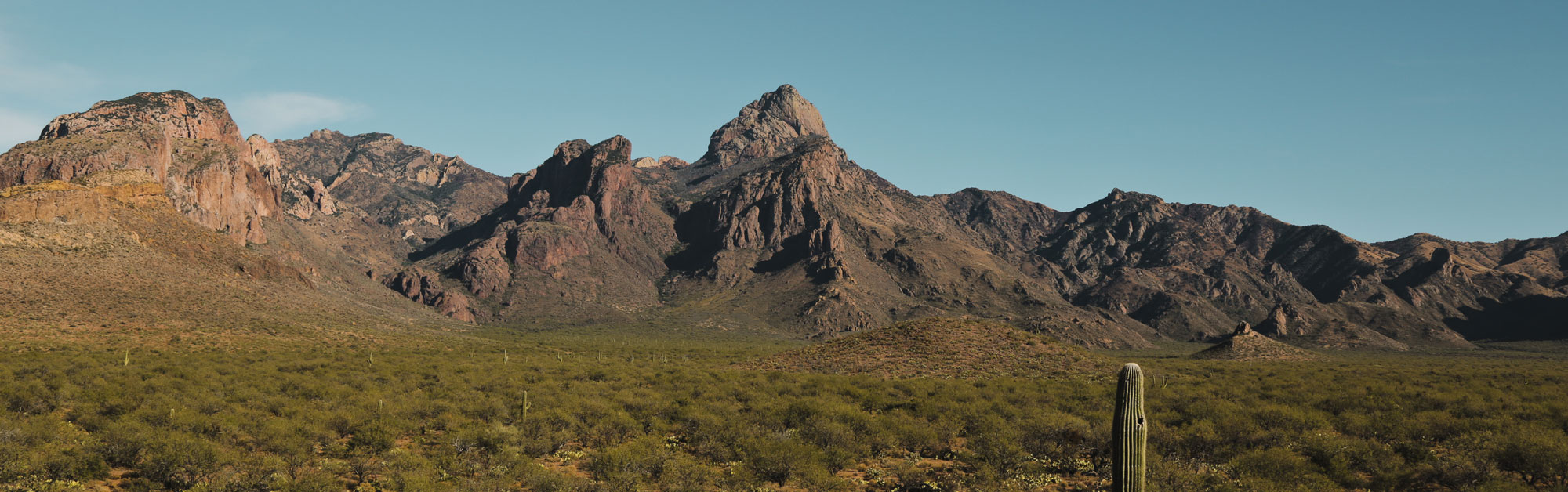
The Tohono O’odham Nation is a federally-recognized tribe that includes approximately 28,000 members occupying tribal lands in Southwestern Arizona. The Nation is the second largest reservations in Arizona in both population and geographical size, with a land base of 2.8 million acres and 4,460 square miles, approximately the size of the State of Connecticut. Its four non-contiguous segments total more than 2.8 million acres at an elevation of 2,674 feet.
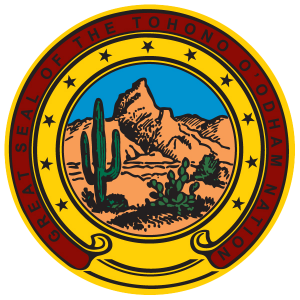
The Great Seal
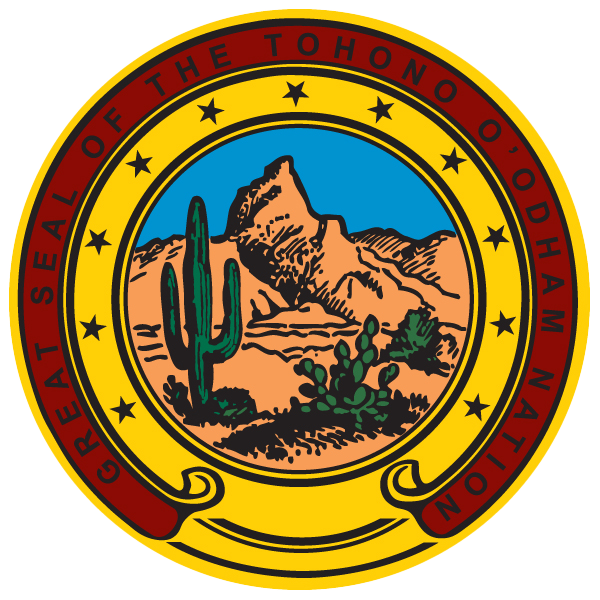
The Great Seal of the Nation consists of items that are symbolic to the Tohono O’odham. Starting from the outside of the Seal is a purple border containing the words “Great Seal of the Tohono O’odham Nation”. Inside the yellow border there are eleven stars which represent one of the eleven districts of the Tohono O’odham Nation: Pisinemo, Hickiwan, Gu Vo, Chukut Kuk, San Lucy, San Xavier, Baboquivari, Sif Oidak, Schuk Toak, Sells and Gu Achi. At the bottom of this border are the dates 1937-1986. 1937 is the year in which the original constitution and by-laws of the Papago Tribe was approved by the United States Department of the Interior. 1986 represents the year in which the Nation adopted a new constitution and changed its name from the Papago Tribe to the Tohono O’odham Nation. The inside picture has a view of the sacred mountain, Baboquivari Peak, home of I’itoi. Also in view is a saguaro, prickly pear and barrel cactus from which the O’odham pick fruit and have various uses from each of these cactus to cook and use for building materials.
Community
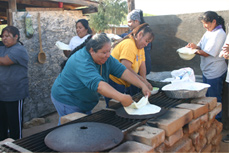
Today’s Tohono O’odham who resides on reservation land live on one of the four separate pieces of land that make up the Tohono O’odham Nation. These pieces of land are the “main” reservation, Florence Village, San Xavier and San Lucy. There are also O’odham who live in Mexico. The Tohono O’odham Nation houses branches of government and their programs, five recreation centers, one health center, six Head Start preschools and much more.
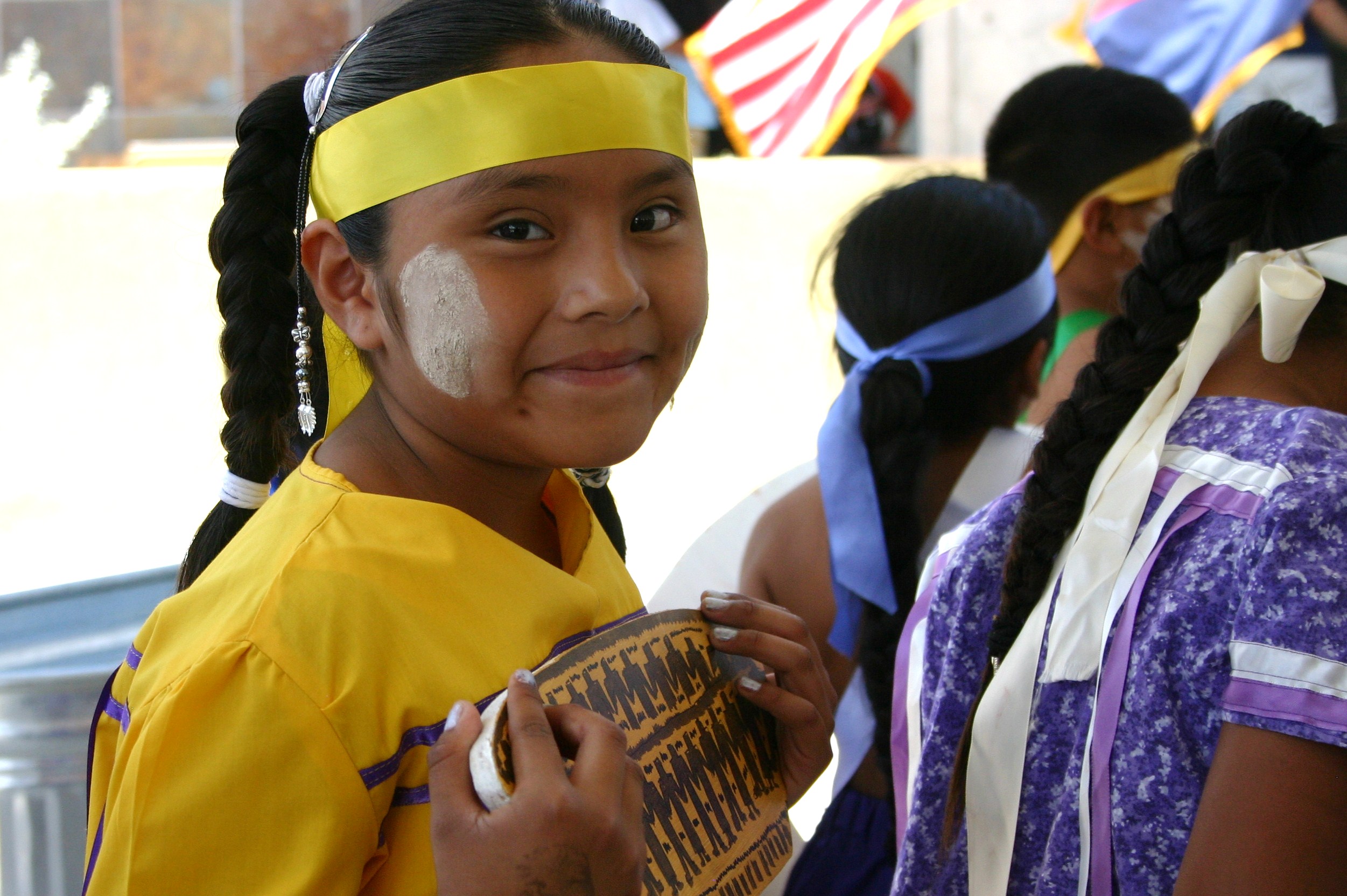
Mascama – Education
O’odham himdag begins in the home, with parents talking to their young children in the early morning hours, repeating life lessons. On cold winter nights, grandparents and other elders tell stories to pass on the values of our people. Traditionally, O’odham parents have always thought ahead to their children’s futures, even when this meant speaking English at home so that children could succeed in school.
Today, we as a Nation need to return to a view that puts learning at the center of childhood. Studying at school, learning through play and family life-this is the work of childhood.
In the same way that learning is central to childhood, education is key to our Nation’s success. At this time when our economy is in the beginning stages of diversifying and maturing, our commitment to education is paramount.
Nationwide, studies have proven that higher education brings higher income, lower unemployment, and better health for individuals, and higher tax revenues, lower crime rates, and improved civic life for the community.
Thus, investing in education will improve the quality of life for our people, which is what the Tohono O’odham tradition of governing is all about
Investment in education → Learning outcomes → Higher quality of life
Location
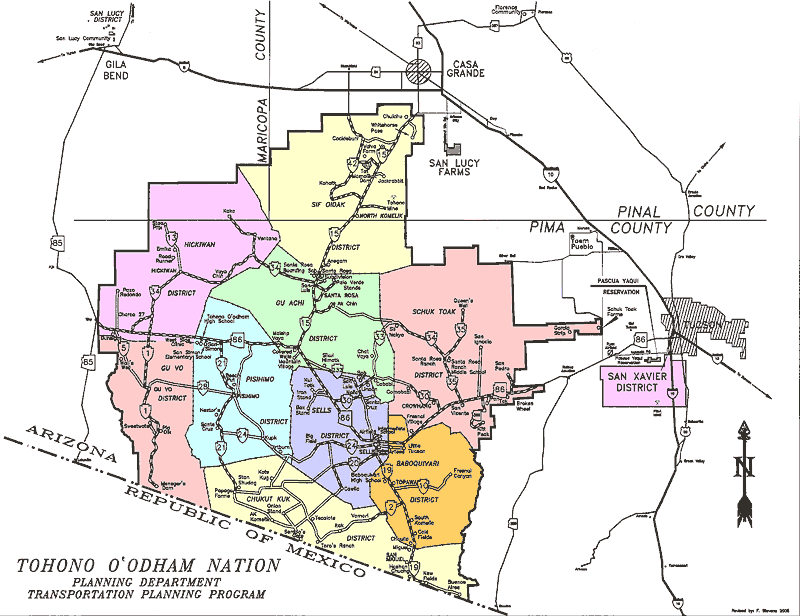
The lands of the Nation are located within the Sonoran Desert in south central Arizona. The largest community, Sells, functions as the Nation’s capital.
Of the four lands bases, the largest contains more than 2.7 million acres. Boundaries begin south of Casa Grande and encompass parts of Pinal, Pima and Maricopa Counties before continuing south into Mexico.
San Xavier is the second largest land base, and contains 71,095 acres just south of the City of Tucson. Smaller parcels include San Lucy District located near the city of Gila Bend and Florence Village, which is located near the city of Florence.
The landscape is consistently compelling: a wide desert valley, interspersed with plains and marked by mountains that rise abruptly to nearly 8,000 feet.
Tribal Government
The Tohono O’odham Nation is comprised of three branches of government;
Executive Branch
The Executive branch houses the Chairman and Vice-Chairman’s office.

Legislative Branch
The Legislative branch houses the tribal council representatives-two reps from each of the 11 districts.
Judicial Branch
The Judicial branch houses the courts and judges.
The three branches of government exist together in a system of checks and balances and allows the Nation to conduct business with the assurance that each branch will keep the other two in harmony.